
Can You Really Get Flat-Fee Divorce Representation in Georgia? What Clients Should Know
Flat-fee divorce has become a popular term in Georgia family law — especially among clients trying to avoid unpredictable legal bills. But many people are surprised to learn that not all “flat-fee” divorce offerings are actually flat fees at all.
So the real question isn’t just whether flat-fee divorce is prudent, it’s whether true flat-fee legal representation actually exists in Georgia — and how to recognize it before you sign anything.
What “Flat-Fee Divorce” Often Means in Georgia — And Why That Matters
In theory, flat-fee divorce means paying a fixed, upfront amount for legal representation, with no hourly billing and no surprise increases.
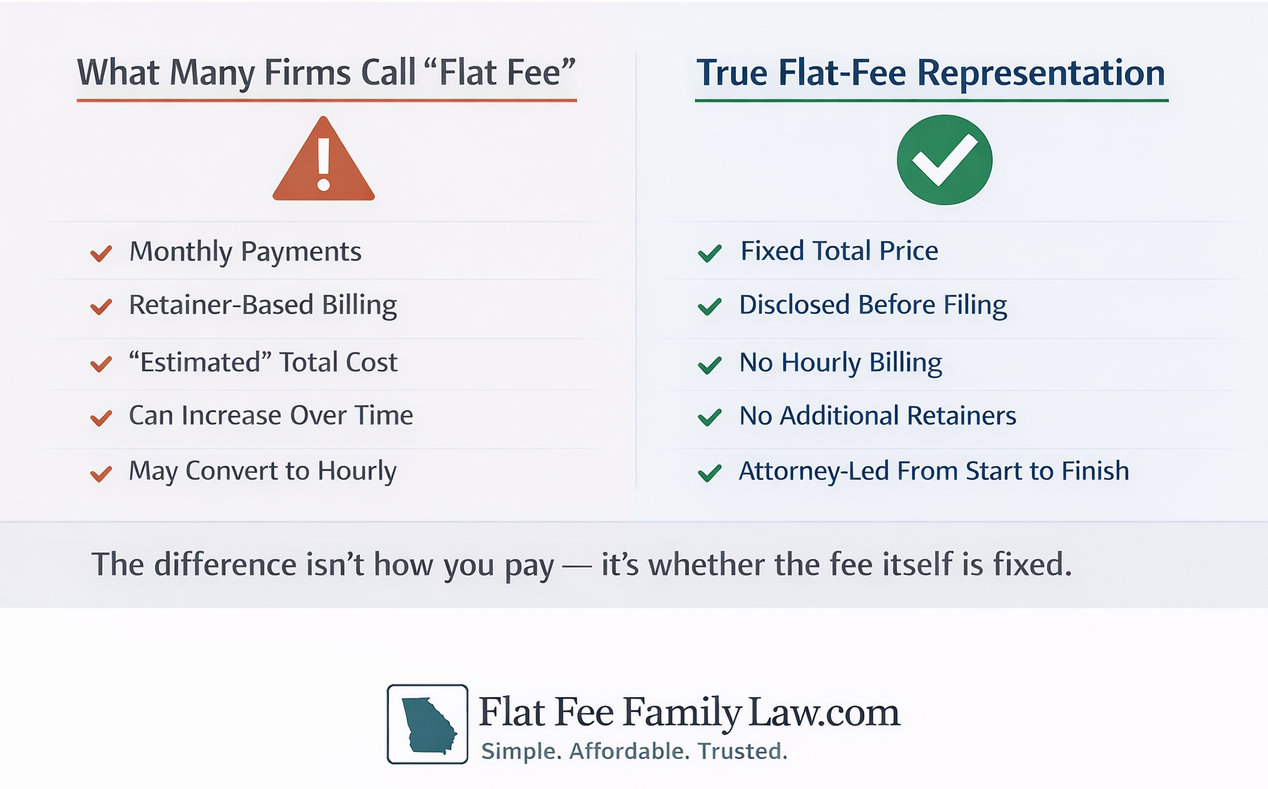
In practice, many Georgia firms advertising “flat-fee” divorce are actually offering:
- Traditional retainer agreements
- Paid through monthly installments
- With total costs that can still increase over time
For example, a firm may tell a client:
“Your divorce will cost around $10,000 — but you can pay it at $600 per month.”
While the payment schedule may feel predictable, the fee itself is not actually flat. The total cost can still rise, additional retainers may be required, and billing often resumes hourly if the case becomes more involved.
That distinction matters — because clients often believe they’ve locked in a final cost when they haven’t.
What True Flat-Fee Divorce Representation Actually Looks Like
True flat-fee divorce representation means:
- A clearly defined scope of representation
- A fixed total cost disclosed before filing
- No hourly billing
- No open-ended retainers
- No surprise increases midway through the case
At Flat Fee Family Law.com, the fee you’re quoted is the fee you pay.
For example:
- An uncontested divorce costs $2,000 — including filing fees
- Divorce or Legitimation:
- $3,500 — If you’ve already been served with divorce papers
- $4,200 — If you are filing first
- Final Hearing representation costs $2,500
There is no conversion to hourly billing.
There are no escalating retainers.
And clients know the full cost before the case begins.
Why True Flat-Fee Divorce Can Work — When Structured Correctly
A true flat-fee model only works when the legal process is designed intentionally.
That requires:
- Careful case screening before filing
- Clear identification of legal issues upfront
- Proper drafting of pleadings and agreements
- Direct attorney involvement throughout the case
When these elements are in place, flat-fee divorce can be both prudent and effective, even in cases that involve court appearances.
Many Georgia families have successfully completed their divorce through Flat Fee Family Law.com with no unexpected legal costs and no prolonged litigation.
Where “Flat-Fee” Divorce Becomes Risky
These issues typically arise not because flat-fee pricing is flawed, but because the underlying legal process has not been redesigned to support it. Common warning signs include:
Monthly Payments Tied to a Retainer
If the firm discusses:
- A total estimate rather than a fixed price
- Monthly payments with no defined end point
- The possibility of “additional fees if things change”
You are likely entering a retainer-based agreement, not a true flat-fee model.
Limited Attorney Involvement
Some flat-fee-style offerings rely heavily on:
- Automated documents
- Staff-managed communication
- Minimal attorney review
Without attorney oversight, errors in pleadings, settlement agreements, or parenting plans can delay the case or require costly corrections.
One-Size-Fits-All Agreements
Georgia courts require precise, compliant filings. Generic documents often lead to delays, rejections, or unnecessary hearings.
Why Attorney-Led Design Is Essential to True Flat Fees
The ability to offer a real flat fee is not about shortcuts — it’s about experience.
An attorney-led flat-fee model ensures:
- Cases are screened before acceptance
- Legal risks are identified early
- Documents are drafted correctly the first time
- Court expectations are met
True flat-fee representation works because the process is built by an experienced Georgia family law attorney — not retrofitted onto a traditional billing model.
Questions Clients Should Ask Before Choosing a “Flat-Fee” Divorce
Before hiring any firm advertising flat-fee divorce in Georgia, clients should ask:
- Is this a fixed total fee or a retainer paid monthly?
- Can the total cost increase after filing?
- Will I ever be billed hourly?
- Who drafts and reviews my legal documents?
- Who appears in court if required?
Clear answers to these questions reveal whether the firm offers true flat-fee representation or simply flexible payment terms.
Final Takeaway
Yes — true flat-fee divorce representation does exist in Georgia.
But not every firm using the term “flat fee” is offering the same thing.
The most important distinction is not how you pay —
It’s whether the fee itself is actually fixed.
Understanding that difference before filing can save clients thousands of dollars — and months of unnecessary stress.
If you’re considering flat-fee divorce, speaking with an attorney before signing any agreement can help you understand exactly what you’re paying for — and what you’re not.
Schedule a call with Flat Fee Family Law.com to learn whether true flat-fee divorce representation is right for your case.
Is flat-fee divorce really flat in Georgia?
Sometimes. Many firms advertise flat fees but still use retainer agreements paid monthly. True flat-fee divorce involves a fixed total cost disclosed upfront.
Can a flat-fee divorce price ever change?
In a true flat-fee model, no. The total cost is set before filing and does not increase.
How can I tell if a firm is offering a real flat fee?
Ask whether the total fee is fixed, whether hourly billing ever applies, and whether additional retainers can be required later.