
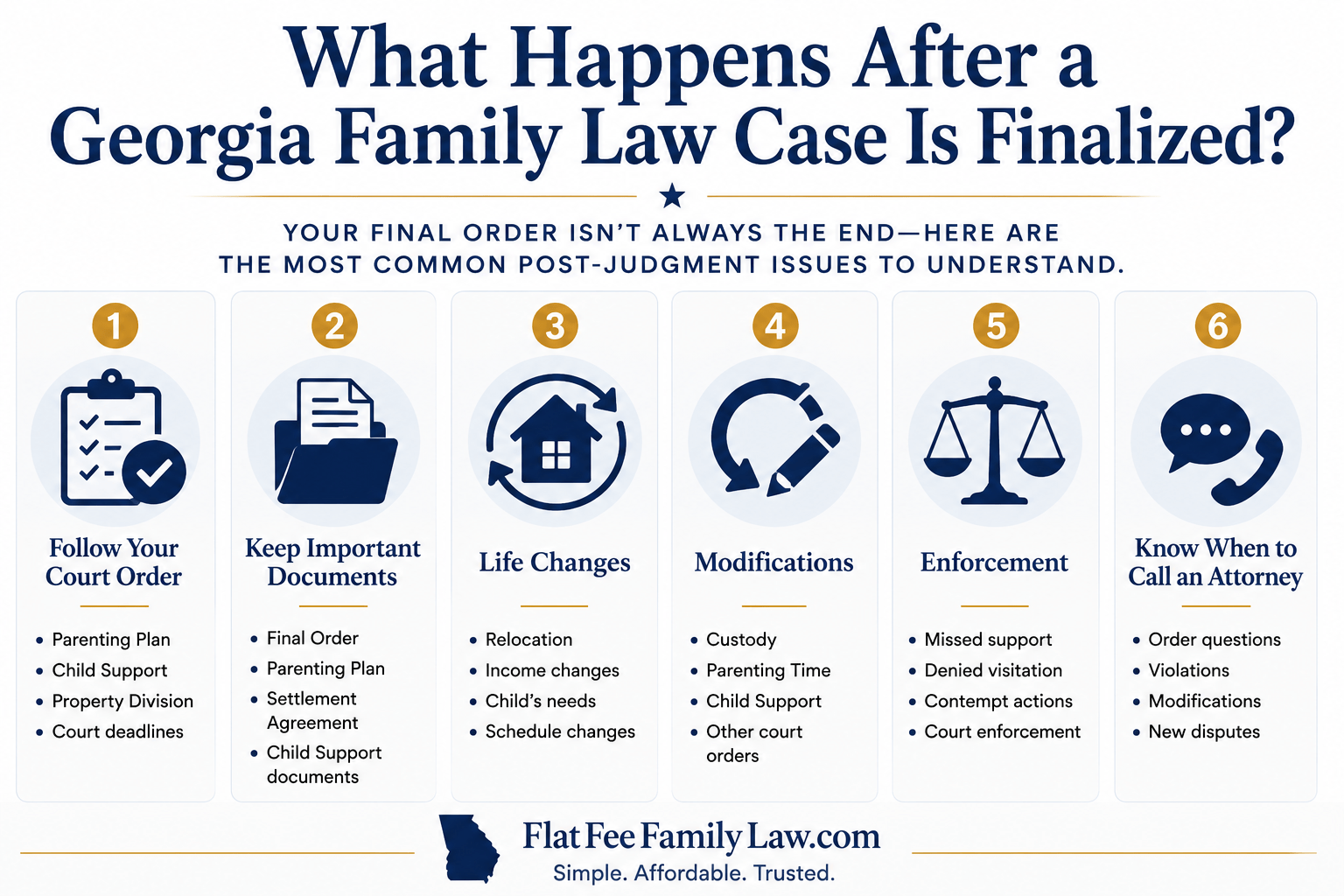
What Happens After a Georgia Family Law Case Is Finalized?
For many people, receiving the final order from the court feels like the finish line. In reality, it is often the beginning of a new chapter. Whether your case involved divorce, child custody, child support, legitimation, or another family law matter, the judge’s final order establishes the legal rights and responsibilities that both parties must follow moving forward.
Understanding what happens next—and what your options are if circumstances change—can help you avoid future legal problems and protect your family’s interests.
Your Final Order Is Legally Binding
Once the judge signs the final order and it is entered by the clerk, every provision becomes legally enforceable. Depending on your case, the order may address:
- Parenting time
- Legal and physical custody
- Child support
- Division of marital property
- Alimony
- Health insurance responsibilities
- Tax issues
- Name changes
- Other family law obligations
Both parties are expected to follow the order exactly as written—even if they disagree with parts of it. Ignoring the order can result in significant legal consequences.
Keep Copies of Your Court Documents
Before putting the case behind you, make sure you have copies of:
- The Final Judgment and Decree
- Parenting Plan
- Child Support Addendum
- Income Deduction Order (if applicable)
- Settlement Agreement
- Any additional court orders
You’ll likely need these documents in the future for:
- Schools
- Medical providers
- Passport applications
- Tax preparation
- Child support questions
- Future court proceedings
Looking for a practical next-steps guide? Our free After a Georgia Family Law Case Checklist highlights common post-judgment tasks, including updating financial accounts, beneficiary designations, insurance policies, and other important records that may need attention after your case is finalized.
Follow the Parenting Plan Carefully
If children are involved, your Parenting Plan becomes the roadmap for co-parenting. This typically covers:
- Regular parenting time
- Holidays
- Summer schedules
- Transportation
- Communication
- Decision-making authority
- Exchanges
Even when both parents generally get along, following the Parenting Plan consistently reduces misunderstandings and conflict.
Child Support Continues Until Modified or Terminated
Many parents assume child support automatically changes if circumstances change.
It usually does not.
Until a court enters a new order, the existing support obligation generally remains in effect. Changes in income, employment, custody arrangements, or the child’s needs may justify a modification, but only after the proper legal process.
Life Changes—and Court Orders Sometimes Need to Change Too
Family law orders are based on the circumstances that existed when the judge entered them. Life rarely stays the same. Common reasons people return to court seeking a modification include:
- A parent relocates
- One parent’s income changes substantially
- The child’s needs change
- Parenting schedules stop working
- One parent repeatedly violates the Parenting Plan
- A child develops medical or educational needs
- One parent remarries
Georgia law allows certain orders to be modified when legal requirements are met.
What Happens If Someone Doesn’t Follow the Order?
Unfortunately, not everyone follows court orders. Common violations include:
- Refusing parenting time
- Failing to return the child on time
- Missing child support payments
- Ignoring property transfer requirements
- Violating communication provisions
When this happens, the court may enforce the existing order through contempt proceedings or other available remedies. It is generally better to address violations through the legal process rather than responding by violating the order yourself.
Can You Appeal the Judge’s Decision?
In some situations, a party may have the right to appeal. Appeals are subject to strict deadlines and are not simply opportunities to ask another judge to reconsider the facts.
Instead, appeals generally focus on whether legal errors occurred during the case. If you believe the court made a significant legal error, it is important to speak with an attorney promptly because appeal deadlines can be short.
Continue Communicating Professionally
Even after litigation ends, communication often continues—especially when children are involved. Helpful practices include:
- Keeping communications factual and respectful
- Using written communication when appropriate
- Following exchange schedules
- Maintaining records of important communications
- Focusing on the children’s needs
Good communication often prevents minor disagreements from becoming new court cases.
Know When to Seek Legal Advice Again
Many people assume they cannot return to court after receiving a final order. In reality, family law cases frequently require future legal assistance. You may wish to speak with an attorney if:
- Your former spouse is violating the order.
- You need to modify custody or visitation.
- Child support should be changed.
- A relocation is being considered.
- New disputes arise regarding the children.
- You are unsure what the court order requires.
Addressing issues early is often less expensive and less stressful than waiting until the conflict grows.
Final Thoughts
A final order marks the end of one legal proceeding, but it also establishes the framework that governs your family’s future. Understanding your rights, following the court’s order, and acting promptly when circumstances change can help you avoid unnecessary disputes and protect what matters most.
If questions arise after your Georgia family law case is finalized, experienced legal guidance can help you understand your options before a small issue becomes a larger one. At Flat Fee Family Law, Brendan Dalton helps clients throughout Georgia navigate post-judgment matters, including modifications, enforcement actions, and other family law issues that may arise after a case is complete.
If you have questions about your existing court order or believe your circumstances have changed, we invite you to schedule a consultation to discuss your situation and learn how we may be able to help.
FAQs
Can a Georgia custody order be changed?
Yes. Custody and parenting time may be modified when the legal requirements are met and a substantial change in circumstances has occurred.
What happens if my ex ignores our divorce decree?
Depending on the circumstances, you may be able to ask the court to enforce the order through a contempt action or other legal remedies.
Does child support automatically change if my income changes?
No. Child support generally remains the same until the court enters a modified order.
How long should I keep my divorce papers?
You should keep certified copies of your final court orders indefinitely. You may need them for future legal, financial, or family matters.
Can we agree to change the parenting schedule without going back to court?
Parents may agree to temporary adjustments, but informal agreements usually do not replace the court’s order. If the change is intended to be permanent, it is generally advisable to have it approved by the court.