
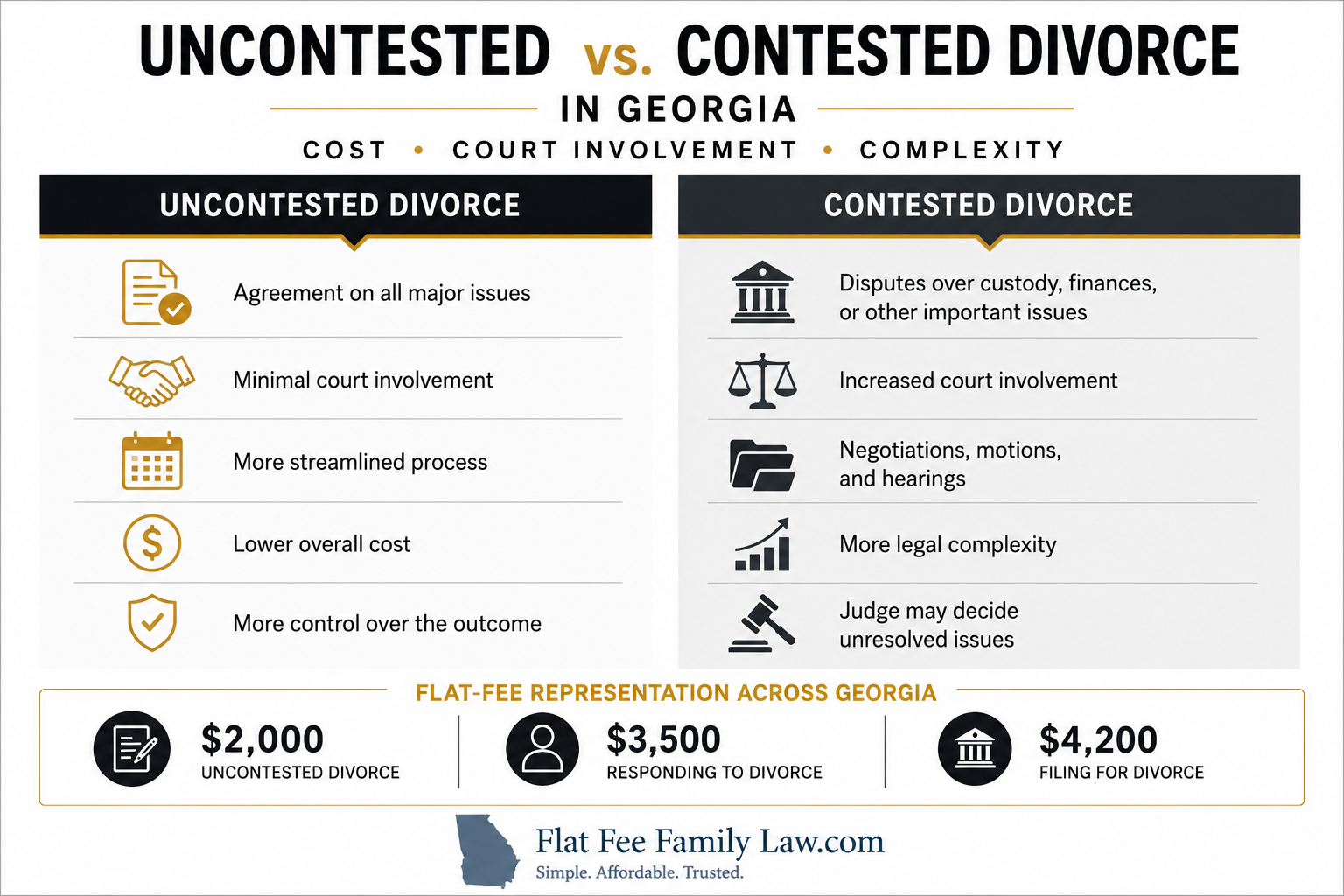
Uncontested vs. Contested Divorce in Georgia: The Biggest Differences in Cost, Court, and Complexity
One of the first decisions people face during a Georgia divorce is whether their case will proceed uncontested or contested. While many people focus only on whether they “agree” with their spouse, the real differences go much deeper than that.
The type of divorce you have can affect:
- Legal costs
- Court involvement
- Stress level
- Control over the outcome
- Attorney involvement
- The overall complexity of the process
Some cases can be resolved cooperatively with limited court involvement. Others require formal litigation to protect important parenting or financial interests. Understanding where your case realistically falls can help you avoid costly mistakes, unnecessary conflict, and delays that make the process more difficult than it needs to be.
The Biggest Difference: Agreement vs. Disagreement
An uncontested divorce means both spouses fully agree on all major issues before the divorce is finalized. That typically includes:
- Property and debt division
- Child custody and parenting schedules
- Child support
- Alimony
- Retirement accounts and financial obligations
Because there are no unresolved disputes for a judge to decide, uncontested divorces are usually more efficient and involve far less conflict.
A contested divorce, on the other hand, happens when spouses disagree on one or more important issues. Sometimes the disagreement exists immediately. Other times, a case that started cooperatively becomes contested during negotiations. Even a single unresolved issue can move a case into contested territory.
How Court Involvement Changes the Process
One of the largest practical differences between uncontested and contested divorce is the level of court involvement required.
Uncontested Divorce
In many uncontested cases:
- Documents are prepared and filed
- Agreements are submitted to the court
- The judge reviews the paperwork
- The divorce is finalized with minimal court involvement
Many uncontested divorces are completed without either spouse appearing in court.
Contested Divorce
Contested cases often require significantly more court interaction, including:
- Temporary hearings
- Status conferences
- Discovery disputes
- Mediation
- Motion practice
- Trial preparation
- Trial before a judge
The more disagreement involved, the more the process becomes dependent on court scheduling, procedural requirements, and litigation strategy.
Why there is a Cost Difference between Uncontested and Contested Divorce
The cost difference between uncontested and contested divorce can be substantial.
Why Uncontested Divorce Costs Less
Uncontested divorces are generally less expensive because they involve:
- Less attorney time
- Fewer filings
- Minimal litigation
- Limited negotiation
- Reduced court appearances
The process is generally more streamlined from beginning to end.
Why Contested Divorce Costs More
Contested divorces require more legal work because attorneys must actively manage disputes involving parenting issues, finances, evidence, negotiations, and court procedures. Depending on the circumstances, contested divorce cases may involve:
- Financial document review
- Discovery requests
- Negotiations with opposing counsel
- Mediation
- Hearing preparation
- Trial preparation
Many Georgia family law firms handle contested divorce cases through hourly billing, which can create uncertainty about overall legal costs as the case progresses.
Timeline Differences in Georgia Divorce Cases
Uncontested divorces are generally more predictable because both parties have already resolved the major issues before finalization.
Georgia law requires a minimum 31-day waiting period after service before a divorce can technically be finalized. In many uncontested cases, the process moves relatively efficiently when paperwork is completed properly and both parties remain cooperative.
Contested divorces are different. The timeline depends heavily on the level of disagreement between the parties, the issues involved, court scheduling, and the willingness of both sides to negotiate productively. Factors that commonly affect contested divorce timelines include:
- Custody disputes
- Financial disagreements
- Discovery and document production
- Mediation and settlement negotiations
- Complex property division
- Business ownership issues
- County-specific court backlog
Because every contested divorce is different, timelines can vary substantially and are often influenced by factors outside either attorney’s control.
In Divorce, Control Over the Outcome Matters
Many people underestimate how much control they give up once a divorce becomes heavily contested.
In Uncontested Divorce
The spouses maintain far more control over:
- Parenting schedules
- Property division
- Financial arrangements
- Settlement structure
- Communication and negotiation
The parties decide what works best for their family rather than asking a judge to decide for them.
In Contested Divorce
When major disagreements cannot be resolved, the court may ultimately decide:
- Custody arrangements
- Parenting schedules
- Financial obligations
- Property distribution
- Other disputed issues
That loss of control is one reason many couples attempt negotiation before moving deeper into litigation.
Can an Uncontested Divorce Become Contested?
Yes — and it happens more often than many people expect. Cases that initially appear simple can become contested if:
- One spouse changes positions
- Parenting disagreements develop
- Financial concerns surface
- Communication breaks down
- Settlement terms were never fully finalized
- Required disclosures are incomplete
This is one reason proper drafting and legal guidance matter even in cooperative divorces. Mistakes early in the process can create delays and conflict that significantly increase both stress and legal costs later.
For a deeper discussion of these issues, read our article:
“Uncontested Divorce in Georgia: 7 Mistakes That Turn Simple Cases Into Contested Ones.”
Should You File an Uncontested or Contested Divorce in Georgia?
Not every case should be uncontested.
If serious disputes exist involving custody, hidden assets, financial misconduct, or complex property division, contested litigation may be necessary to protect your long-term interests.
At the same time, many couples assume they need a contested divorce when productive negotiation could still help resolve the case more efficiently. The key is understanding your situation realistically before making decisions that affect your finances, parenting rights, and future.
Legal Guidance Can Help Prevent Costly Mistakes
Even in divorces that begin cooperatively, problems can arise when agreements are incomplete, parenting plans are unclear, financial disclosures are missing, or court procedures are not properly followed.
Many divorces become more stressful and expensive simply because issues were not fully addressed early in the process.
Working with an attorney can help reduce the risk of:
- Incomplete settlement agreements
- Parenting plan disputes
- Filing and procedural errors
- Delays caused by missing documents
- Misunderstandings about financial obligations
- Unnecessary escalation between spouses
Proper preparation and realistic expectations often make a significant difference in how efficiently a divorce proceeds.
Final Thoughts
The difference between uncontested and contested divorce in Georgia is not simply whether spouses disagree. The type of divorce affects the complexity of the process, the amount of court involvement required, the legal costs involved, and how much control the parties maintain throughout the case.
For some families, an uncontested divorce offers a more efficient and affordable path forward. For others, contested litigation may be necessary to protect important parenting or financial interests. Understanding the distinction early can help you make better decisions, avoid unnecessary conflict, and move forward with greater clarity.
At Flat Fee Family Law, our attorney Brendan Dalton works with clients throughout Georgia to help them understand their options, navigate the divorce process efficiently, and move forward with greater confidence and predictability.
Choosing the right approach early in the process can significantly reduce unnecessary conflict, delays, and legal expenses later. If you are considering divorce in Georgia and want to better understand your options, schedule a call to discuss your situation and learn more about flat-fee divorce representation available statewide.
Frequently Asked Questions
Is uncontested divorce cheaper in Georgia?
In most cases, yes. Uncontested divorces typically require less court involvement, fewer filings, and less attorney time than contested divorces.
What makes a divorce contested in Georgia?
A divorce becomes contested when spouses disagree on one or more major issues, such as custody, property division, child support, or alimony.
Can an uncontested divorce become contested?
Yes. A case may become contested if disagreements develop during negotiations or if one spouse changes positions after the process begins.
Does contested divorce always mean trial?
No. Many contested divorce cases settle before trial through negotiation or mediation, although some cases ultimately require a judge to decide unresolved issues.