Discovery in Georgia Family Law Cases: What to Expect and Why It Matters
Many people are surprised to learn that one of the most important stages of a Georgia family law case happens long before anyone walks into a courtroom. Whether your case involves divorce, child custody, child support, legitimation, or another contested family law matter, the discovery process allows each side to obtain information, documents, and other evidence needed to evaluate the issues in dispute.
Discovery is an important stage of a family law case. It allows each side to evaluate the strengths and weaknesses of the evidence, frequently leading to settlement or narrowing the issues that ultimately require the court’s decision. Understanding how the process works can help you avoid costly mistakes and better prepare for the next stage of your case.
What Is Discovery?
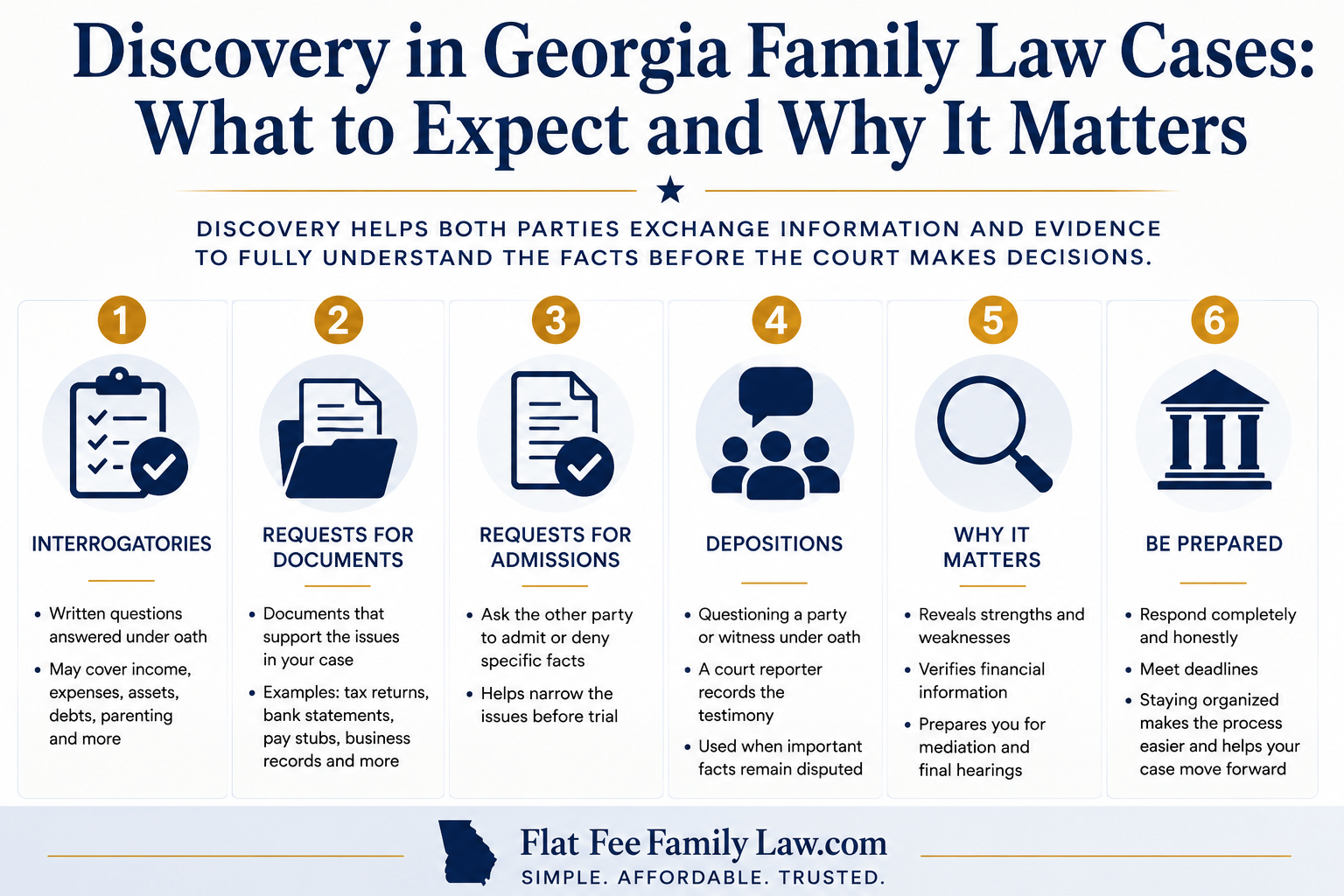
Discovery is the formal process through which each party requests information and evidence from the other side. The goal is simple: allow both parties to fully understand the facts before the court makes important decisions affecting finances, property, or children.
Rather than relying on surprise evidence at trial, Georgia courts generally expect both parties to exchange relevant information during discovery. The purpose of discovery is to give both parties access to the information needed to fairly evaluate the case. Rather than allowing either side to rely on surprise evidence at a hearing, discovery encourages transparency and helps ensure that decisions are based on complete and accurate information.
When Does Discovery Happen?
Discovery typically begins after a contested family law case has been filed and the other party has responded. The timing varies from case to case, but discovery often takes place while the parties are negotiating, attending mediation, or preparing for future hearings.
Because discovery can involve gathering financial records, employment information, business documents, or other evidence, it is not unusual for this stage of the case to take some time.
Common Types of Discovery
Georgia family law cases often involve several different discovery tools. The scope of discovery depends on the issues involved in the case. More complex cases may require extensive financial disclosures, while simpler disputes often involve a much narrower exchange of information.
Interrogatories
Interrogatories are written questions that must be answered under oath. These questions may ask about:
- Employment
- Income
- Monthly expenses
- Assets and debts
- Parenting responsibilities
- Other facts relevant to the case
Requests for Production of Documents
A party may also request documents that support the issues being litigated. Examples include:
- Tax returns
- Pay stubs
- Bank statements
- Credit card statements
- Retirement account statements
- Business records
- Medical records (when relevant)
- Communications relating to disputed issues
Requests for Admissions
These requests ask a party to admit or deny specific facts. They are often used to narrow the issues that remain in dispute before trial.
Depositions
In some cases, attorneys may question a party or witness under oath before trial. A court reporter records the testimony, which may later be used during hearings or trial if appropriate. Not every family law case requires depositions, but they may be useful when important facts remain disputed.
Why Discovery Matters
Many people think discovery is simply paperwork but in reality, it often shapes the direction of the entire case. Discovery benefits both attorneys and clients by helping everyone better understand the strengths and weaknesses of the case. It often reveals areas where the parties agree, identifies the issues that remain disputed, and provides the information needed to prepare for mediation or a final hearing. The discovery process serves several important purposes, including helping the parties and their attorneys:
- Evaluate the strengths and weaknesses of a case.
- Verify financial information.
- Identify disputed issues.
- Prepare for mediation.
- Prepare for final hearings.
- Determine whether additional investigation is necessary.
Complete and accurate discovery also helps avoid unnecessary delays and reduces the likelihood of disputes over missing information.
The Importance of Accurate Responses
Discovery responses are generally provided under oath. Providing incomplete, misleading, or inaccurate information can create significant problems later in the case.
If information changes after discovery responses are served, parties may also have an obligation to supplement those responses. Being organized and providing accurate information from the beginning often makes the process much smoother.
What Happens If Someone Doesn’t Respond?
Ignoring discovery requests rarely makes them disappear. If a party fails to respond or refuses to provide required information, the other side may ask the court to compel discovery.
Depending on the circumstances, the court may require additional responses, impose sanctions, or take other actions authorized under Georgia law. For that reason, discovery deadlines should be taken seriously.
Discovery Often Leads to Settlement
Many contested family law cases resolve after discovery has been completed. Once both parties have access to the relevant financial information and evidence, it often becomes easier to evaluate the strengths and weaknesses of each position.
Even when a case does not settle immediately, discovery frequently narrows the issues that ultimately need to be decided by the court.
Preparing for Discovery
Although discovery can seem overwhelming, much of the stress comes from gathering documents and understanding what information is being requested. Keeping financial records organized, responding honestly, and working closely with your attorney can help make the process more manageable.
Every family law case is different, and the scope of discovery depends on the issues involved. Choosing the right family law attorney can help ensure your responses are complete, timely, and tailored to your specific case.
Brendan Dalton represents clients throughout Georgia in contested divorce, child custody, child support, legitimation, and other family law matters. If you have questions about discovery or another Georgia family law issue, contact Flat Fee Family Law to schedule a consultation.
FAQs
What is discovery in a Georgia family law case?
Discovery is the legal process through which both parties exchange information, documents, and evidence relevant to the issues in dispute before trial or a final hearing.
Does every Georgia divorce involve discovery?
No. Discovery is most common in contested cases. Many uncontested divorces resolve without formal discovery because the parties have already reached an agreement.
What documents are commonly requested during discovery?
Common requests include tax returns, bank statements, pay stubs, retirement account statements, business records, credit card statements, and other documents relevant to the issues in the case.
What happens if I ignore discovery requests?
Failing to respond may result in the other party asking the court to compel responses and, in some situations, the court may impose sanctions or other remedies.
Are discovery responses given under oath?
Yes. Many discovery responses are verified under oath, making accuracy and completeness important.
Can discovery help settle a case?
Often, yes. Once both parties have exchanged relevant information, it is frequently easier to evaluate settlement options and narrow the issues that require a court’s decision.