How Divorce Mediation Works in Georgia: What to Expect Before Your Mediation
For many Georgia families, mediation is one of the most important steps in a contested divorce. Rather than asking a judge to decide every disputed issue, mediation gives both parties an opportunity to negotiate a resolution with the assistance of a neutral mediator.
Many divorce cases settle during or shortly after mediation, making it an important opportunity to resolve disputes while maintaining greater control over the outcome of your case. Understanding how mediation works can help you prepare for the process and make the most of your mediation session.
What Is Divorce Mediation?
Mediation is a confidential settlement conference where both parties, their attorneys, and a neutral mediator work together to resolve disputed issues.
The mediator does not make decisions or determine who is right or wrong. Instead, the mediator helps facilitate productive discussions and encourages the parties to explore possible solutions. The goal is to reach an agreement that both parties can accept without the need for a trial.
Is Mediation Required in Georgia?
In many contested divorce cases, yes. Many Georgia courts require mediation before scheduling a final trial, although the specific requirements vary by county and by judge. Even when mediation is not mandatory, many parties choose to participate because it provides an opportunity to resolve disputes before incurring the additional time and expense associated with litigation. If mediation results in a complete agreement, the remaining court process is often much simpler.
What Issues Can Be Resolved During Mediation?
Almost every issue in a divorce may be discussed during mediation, including:
- Child custody
- Parenting time
- Child support
- Alimony
- Division of marital property
- Division of retirement accounts
- Allocation of debts
- Other financial issues
The parties may resolve every issue, only some issues, or no issues at all.
What Happens During Mediation?
Although every mediator conducts sessions differently, most Georgia divorce mediations follow a similar process.
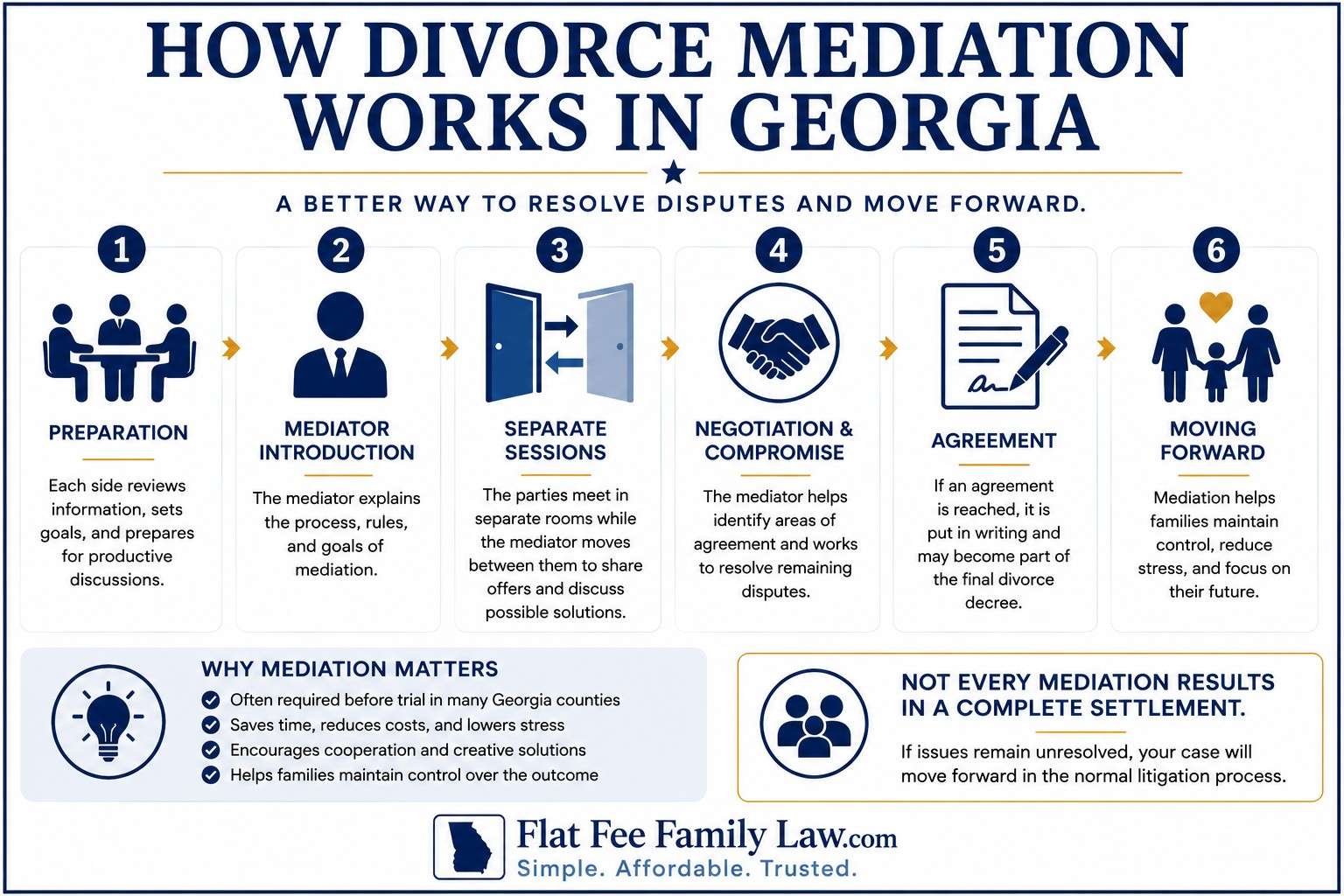
The mediator begins by explaining the rules and goals of mediation. Each side has an opportunity to discuss the issues that remain unresolved. Most mediations involve the parties meeting separately in different rooms while the mediator moves back and forth between them, communicating settlement offers and discussing possible compromises. This allows both sides to negotiate candidly while reducing unnecessary conflict. Throughout the day, the mediator works to identify areas of agreement and narrow the remaining disputes.
How Should You Prepare for Mediation?
Preparation often has a significant impact on the success of mediation. Before your session, it is helpful to:
- Review your financial documents.
- Understand your goals and priorities.
- Discuss realistic settlement options with your attorney.
- Be prepared to compromise where appropriate.
- Gather any documents that may help support your position.
Many successful mediations occur because both parties arrive prepared and willing to engage in meaningful discussions.
Common Mistakes to Avoid During Divorce Mediation
Many mediations are more productive when both parties arrive prepared and focused on resolving issues rather than “winning” every disagreement. Common mistakes include:
- Arriving without reviewing important financial information.
- Refusing to consider reasonable compromise.
- Letting emotions drive every decision.
- Focusing only on immediate concerns instead of long-term goals.
- Failing to discuss settlement options with your attorney before mediation.
Avoiding these common mistakes can help make mediation more productive and increase the likelihood of reaching an agreement.
What Happens If Mediation Is Successful?
If the parties reach an agreement, the mediator or attorneys typically prepare a written settlement agreement outlining the terms. Depending on the circumstances, that agreement may later become part of the court’s final divorce decree. Resolving issues through mediation often allows families to avoid the uncertainty, expense, and stress associated with a contested trial.
What Happens If Mediation Is Not Successful?
Not every mediation results in a complete settlement.
If some issues remain unresolved, the case simply continues through the normal litigation process. Discovery may continue if necessary, additional negotiations may occur, and unresolved issues may ultimately be decided by the court. Even when mediation does not fully resolve the case, it often narrows the issues that require a judge’s decision.
Experienced Guidance Before and During Mediation
Mediation is often one of the most important opportunities to resolve a divorce without a trial. Understanding your legal rights, preparing thoroughly, and approaching negotiations with realistic expectations can make the process more productive.
Brendan Dalton represents clients throughout Georgia in contested divorce, child custody, child support, legitimation, and other family law matters. If you have questions about mediation or another family law issue, contact Flat Fee Family Law to schedule a consultation.
FAQs
What is divorce mediation in Georgia?
Divorce mediation is a confidential process in which a neutral mediator helps spouses negotiate a resolution to disputed issues such as custody, child support, property division, and alimony without asking a judge to decide those issues.
Is mediation required before divorce in Georgia?
Many Georgia courts require mediation in contested divorce cases before scheduling a final trial. The specific requirements vary depending on the county and the judge assigned to the case.
Does the mediator make decisions?
No. A mediator does not decide the outcome of your case. The mediator facilitates negotiations and helps the parties work toward a mutually acceptable agreement.
Can mediation resolve child custody issues?
Yes. Parents may negotiate custody, parenting time, holiday schedules, and other parenting issues during mediation.
What if mediation does not resolve my case?
If mediation is unsuccessful, your case generally continues through the litigation process. The parties may continue negotiating, conduct additional discovery, or present unresolved issues to the court for a decision.
How should I prepare for divorce mediation?
Preparing financial documents, understanding your priorities, discussing strategy with your attorney, and approaching mediation with realistic expectations can help make the process more productive.