My Spouse Filed for Divorce in Georgia. Do I Need an Attorney?
Being served with divorce papers can be unsettling, especially if you were not expecting your spouse to file. You may be wondering whether you need to hire an attorney, how much time you have to respond, and what happens if you disagree with the terms your spouse is requesting. One of the most important things to understand is that receiving divorce papers does not mean your spouse gets to decide the outcome of your divorce.
You have an opportunity to respond, address the issues raised in the complaint, and protect your interests. However, Georgia has legal deadlines and procedural requirements that should not be ignored. You are not required to hire an attorney simply because your spouse filed for divorce in Georgia. You can represent yourself. But if the divorce involves disagreements about property, finances, custody, or support, having an attorney prepare your response and represent your interests may be particularly important. Here’s what you should know before deciding how to proceed.
What Happens When Your Spouse Files for Divorce in Georgia?
When one spouse files for divorce, that person is called the plaintiff. The other spouse is the defendant. The plaintiff generally begins the case by filing a Complaint for Divorce in the appropriate Georgia Superior Court.
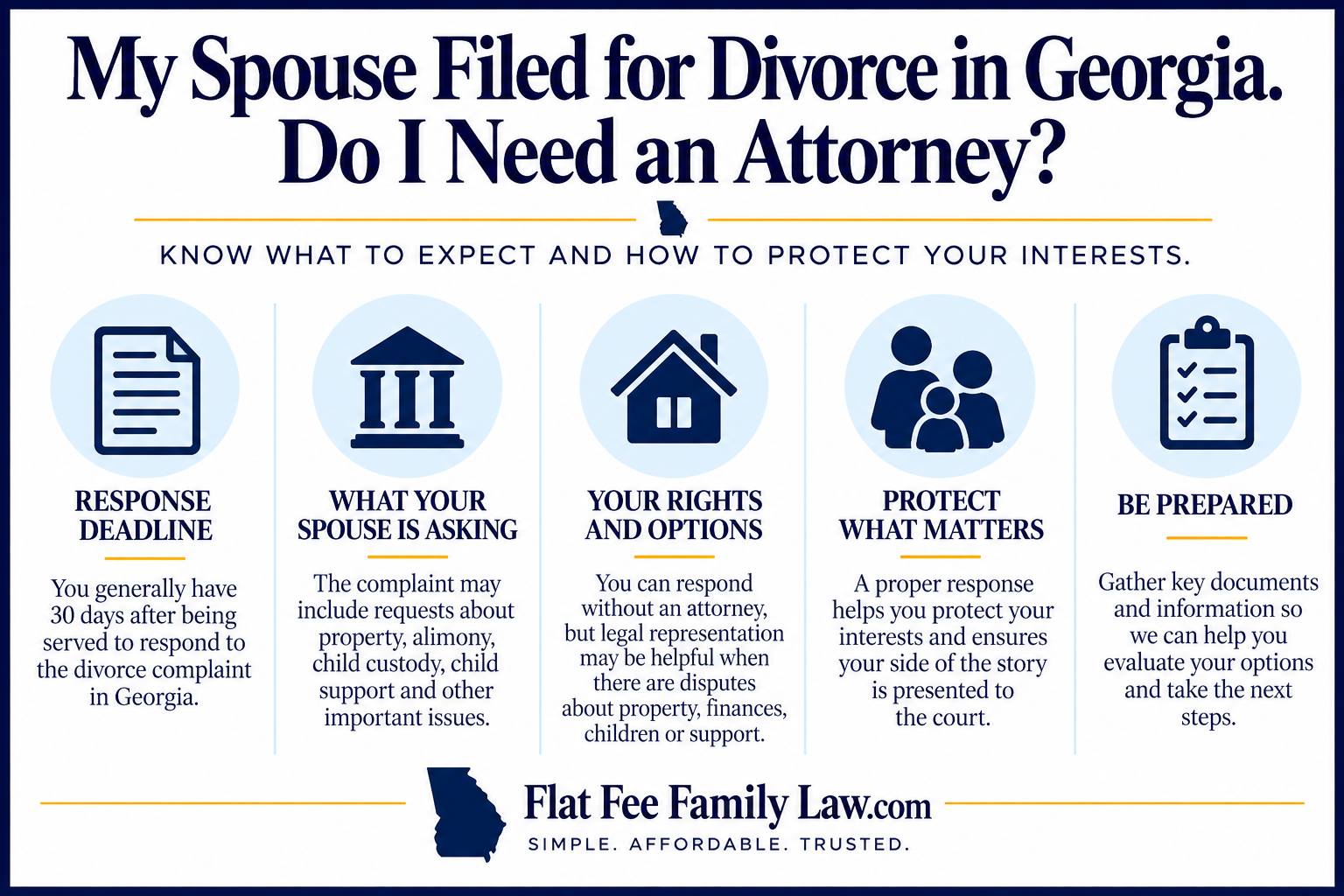
The complaint identifies the parties, provides information about the marriage, and explains what the filing spouse is asking the court to decide. Depending on the circumstances, the complaint may request:
- A divorce ending the marriage
- Division of marital property and debts
- Alimony or other financial relief
- Child custody and parenting time
- Child support
- Temporary or final orders concerning financial and parenting responsibilities
After the case is filed, the defendant must generally be served with the legal documents through an authorized method. Being served gives you formal notice of the case and an opportunity to respond. It does not mean the court has already agreed with your spouse’s requests.
How Long Do You Have to Respond to Divorce Papers in Georgia?
Under Georgia law, a defendant generally has 30 days after being served with the summons and complaint to respond. The applicable rule is O.C.G.A. § 9-11-12(a).
The deadline generally begins when you are served, not when your spouse originally filed the divorce complaint. Certain motions and procedural circumstances can affect the deadline, so you should not assume that every case follows an identical timeline. If you have received divorce papers, identify the date you were served and have the documents reviewed promptly.
What Happens If You Miss the 30-Day Deadline?
Failing to respond can put you at a significant disadvantage. Georgia’s civil procedure rules provide for default when a required answer is not filed on time. The rules also address circumstances in which a default may be opened.
Divorce cases involve additional legal considerations, and missing the deadline does not necessarily mean that every request in the complaint will automatically be granted. However, failing to respond can complicate your ability to defend your position and participate effectively in the proceedings. If the deadline has already passed, you should contact an attorney promptly rather than assuming it is too late to take action.
Do You Have to Hire an Attorney to Answer a Divorce Complaint?
No. Georgia law generally permits individuals to represent themselves in their own divorce cases. This is sometimes called proceeding pro se. However, being legally permitted to represent yourself does not mean doing so is the best choice for every situation.
A divorce complaint may contain requests involving substantial financial obligations, ownership of property, retirement benefits, parenting arrangements, or other matters that can affect your life long after the divorce is finalized. An attorney can help you understand what your spouse is requesting, identify issues that need to be addressed, and prepare an appropriate legal response. The decision often depends on what is at stake and whether you and your spouse agree on the issues.
What Does an Attorney Do When Responding to Divorce Papers?
When you hire an attorney after being served with divorce papers, one of the first steps is reviewing the complaint and the other documents you received. The attorney can then determine what response is appropriate based on the allegations, requests, and circumstances of your case.
Review the Divorce Complaint
The complaint establishes what your spouse is asking the court to decide. Your attorney can review the requested relief and help identify issues that require attention. For example, your spouse may be requesting primary custody, exclusive use of the marital home, or a particular division of property. Understanding those requests is essential before preparing a response.
Prepare and File an Answer
An Answer is a formal legal response to the allegations in the complaint. It generally addresses the statements made by the filing spouse and identifies whether particular allegations are admitted, denied, or otherwise require a response. An Answer should be prepared carefully because it becomes part of the court record and can affect how the case proceeds.
Evaluate Whether Additional Claims Are Appropriate
Depending on the circumstances, a defendant may need to assert additional claims or requests for relief. For example, the responding spouse may have different positions concerning property division, custody, or other issues. An attorney can determine whether a counterclaim or another filing is appropriate and how those matters should be presented to the court.
Address Temporary Issues
Some divorce cases involve immediate disagreements about finances, housing, or children. Examples include:
- Who will remain in the marital home
- Who will pay the mortgage and household expenses
- Temporary parenting arrangements
- Temporary child support
- Temporary financial support
Depending on the circumstances, the court may be asked to enter temporary orders addressing certain issues while the divorce is pending. An attorney can evaluate whether temporary relief is necessary and explain the available options.
What If You Disagree With What Your Spouse Is Asking For?
You do not have to agree with every request in the divorce complaint. For example, your spouse may propose a property division that you believe is unfair or request a custody arrangement that does not reflect your child’s circumstances. You may also disagree about alimony, responsibility for marital debts, or how retirement accounts should be handled. These disagreements are among the reasons a divorce may proceed as a contested case.
A contested divorce does not necessarily mean the spouses will have to go to trial. Many contested divorce cases are resolved through negotiation, mediation, or a settlement reached after the case has begun. However, until the issues are resolved, each spouse should understand the claims being made and the potential consequences of any proposed agreement.
What If You Agree to the Divorce but Not the Terms?
It is possible to agree that the marriage should end while disagreeing about the financial or parenting arrangements. For example, you might agree to divorce but disagree about:
- Whether the marital home should be sold
- How bank or retirement accounts should be divided
- Which parent should have primary physical custody
- How parenting time should be scheduled
- The appropriate child support amount
Agreeing that the marriage should end does not require you to accept every term proposed by your spouse. An attorney can help distinguish the issues that are already resolved from those that still require negotiation or a court decision.
Should You Sign the Documents Your Spouse Gives You?
Before signing any divorce-related document, make sure you understand what it says and what legal consequences may follow. There is an important difference between acknowledging receipt of documents and agreeing to substantive divorce terms. For example, an acknowledgment of service generally concerns receipt of legal papers, while a settlement agreement may establish binding obligations involving property, finances, or children.
Some documents may also include additional waivers or acknowledgments. If your spouse or your spouse’s attorney has provided documents for your signature, consider having an independent attorney review them first. This is particularly important when the documents address significant assets, debts, retirement benefits, custody, or support.
What If Your Spouse Already Has an Attorney?
Your spouse’s attorney represents your spouse, not you. Even if the attorney communicates professionally with both parties or prepares documents intended for both spouses to sign, that does not mean the attorney is protecting your individual interests.
If your spouse has hired an attorney and you are unsure about the terms being proposed, obtaining your own legal advice can help you understand your rights and options. You do not necessarily need to pursue an aggressive divorce simply because your spouse has legal representation. Independent representation can also help identify opportunities for a reasonable settlement.
Can a Contested Divorce Become Uncontested After You Respond?
Yes. A divorce may begin with disagreements but later become fully resolved through negotiation or mediation. For example, spouses may initially disagree about the marital home or parenting schedule but eventually reach terms both can accept.
When the necessary issues are resolved, the agreement can be documented and submitted through the appropriate legal process. The fact that your spouse filed first does not prevent the two of you from reaching a settlement. Likewise, hiring an attorney to respond does not mean you are committing to a prolonged court battle. Legal representation can help you evaluate proposed terms and work toward a resolution while protecting your interests.
What Should You Do Immediately After Being Served With Divorce Papers?
If your spouse has filed for divorce in Georgia, there are several practical steps you can take.
1. Identify the Date You Were Served
The response deadline is important. Record when and how you received the documents.
2. Read the Complaint and Any Attached Orders
Review what your spouse is requesting and whether the documents include notices, scheduled hearings, or existing court orders.
3. Gather Relevant Financial and Parenting Information
Depending on the issues involved, useful information may include financial records such as: mortgage documents, income information, retirement account details, and information about your children’s current arrangements.
4. Avoid Signing Agreements You Do Not Understand
Before signing a settlement agreement or a document containing legal waivers, make sure you understand its terms.
5. Speak With a Georgia Divorce Attorney Before the Response Deadline
An attorney can review your documents, explain the next steps, and help determine the appropriate response. You do not have to wait until the deadline is approaching to seek representation.
Served With Divorce Papers in Georgia? Understand Your Options Before Responding.
Receiving divorce papers can leave you with questions about your rights, your finances, your children, and what happens next. Although you are not required to hire an attorney to respond, the decisions you make early in the process can affect how your divorce proceeds. Understanding the complaint, meeting applicable deadlines, and addressing the issues that matter most to you are important first steps.
At Flat Fee Family Law, attorney Brendan Dalton represents clients throughout Georgia in contested divorce matters, including cases involving property division, financial disputes, custody, and support. Our flat-fee approach provides predictable attorney pricing rather than traditional hourly billing. Brendan can review the divorce papers you received, explain your options, and help you determine the appropriate next steps.
If your spouse has filed for divorce and you need to respond, schedule a free consultation with Flat Fee Family Law to discuss your situation before important deadlines pass.
Frequently Asked Questions About Responding to Divorce Papers in Georgia
How many days do I have to respond to divorce papers in Georgia?
A defendant generally has 30 days after service of the summons and complaint to respond, subject to applicable legal exceptions and procedural rules.
Can I respond to divorce papers without a lawyer?
Yes. You may represent yourself in your own Georgia divorce case. However, an attorney can help prepare the response and address issues involving property, finances, custody, and support.
What happens if I do not respond to my spouse's divorce complaint?
Missing the response deadline can create default-related and other procedural consequences. Divorce cases have additional legal requirements, so the outcome depends on the circumstances. Seek legal advice promptly if you have missed the deadline.
Does my spouse have an advantage because they filed first?
Filing first allows your spouse to initiate the case and state the relief requested, but it does not automatically give that spouse a legal advantage on property division, custody, or other disputed issues.
Can I disagree with the divorce settlement my spouse proposed?
Yes. You are not required to accept a proposed settlement simply because your spouse filed for divorce. Disputed issues may be addressed through negotiation, mediation, or court proceedings.
Can I hire an attorney after my spouse has already filed?
Yes. You can hire an attorney after the case begins. Because deadlines may already be running, it is important to seek representation promptly.
Can we still settle the divorce if I hire an attorney to respond?
Yes. Hiring an attorney does not prevent settlement. An attorney can help negotiate terms, prepare the necessary documents, and work toward resolving the case without a trial when possible.