Who Pays the Mortgage and Household Expenses During a Georgia Divorce?
When spouses separate or file for divorce, one of the most immediate financial questions is often what happens to the bills. Who pays the mortgage? What about utilities, homeowners insurance, property taxes, HOA fees, repairs, or other expenses associated with the marital home?
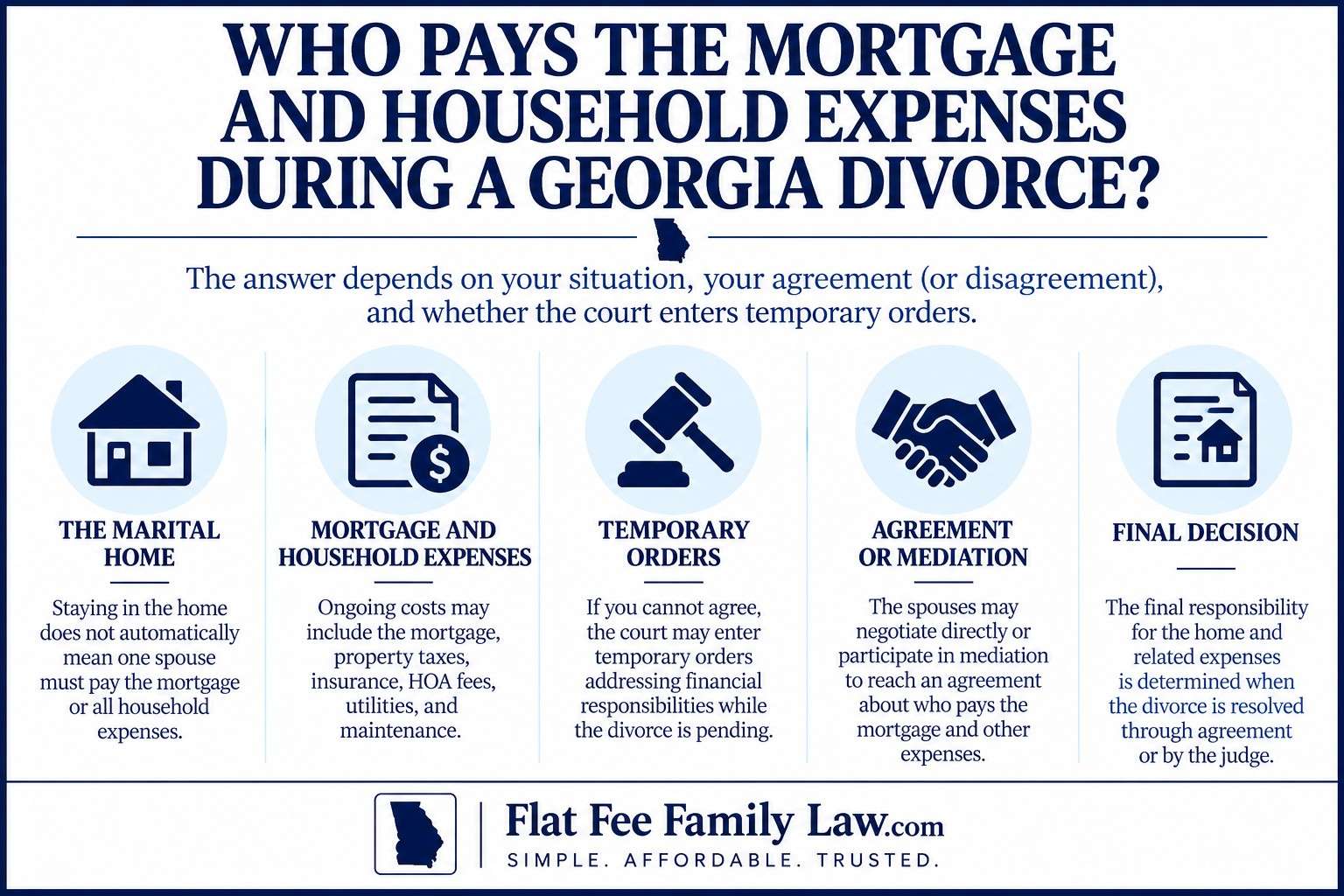
In Georgia, filing for divorce does not automatically determine which spouse must pay the mortgage or household expenses while the case is pending. The answer may depend on how the bills were being paid before the divorce, whether the spouses can reach an agreement, and whether the court enters temporary orders addressing financial responsibilities.
Understanding these issues early can be particularly important when the spouses are living separately but remain financially connected through the marital home.
Who Pays the Mortgage While a Georgia Divorce Is Pending?
There is no single rule requiring the spouse who remains in the home—or the spouse who moves out—to automatically pay the mortgage during a divorce. If both spouses are borrowers on the mortgage, they generally remain responsible to the lender according to the loan agreement unless the loan is refinanced, paid off, or otherwise changed. The divorce case can determine financial responsibilities between the spouses, but that is different from changing their obligations to the mortgage lender.
While the divorce is pending, the spouses may agree about who will make the mortgage payment. If they cannot agree, the issue may be addressed through temporary orders as part of the divorce case.
What If Only One Spouse Is Living in the Marital Home?
Moving out of the marital home does not necessarily eliminate a spouse’s financial connection to the property. For example, one spouse may remain in the home with the children while the other spouse lives elsewhere. That arrangement does not, by itself, determine who must pay the mortgage or every expense associated with the property.
The financial arrangement may depend on the spouses’ incomes, existing obligations, temporary support, who is occupying the home, and other circumstances in the case. That is one reason questions about the marital home in a Georgia divorce often need to be considered as part of the larger financial picture rather than as an isolated issue.
Can a Judge Order One Spouse to Pay the Mortgage During the Divorce?
Financial responsibilities can be addressed while a divorce is pending. When the spouses cannot agree about immediate issues, a temporary hearing may allow the court to establish arrangements that apply while the case proceeds. Depending on what has been requested and the circumstances of the case, temporary financial issues can include the marital home, support, and other ongoing expenses.
Temporary arrangements are not necessarily the same as the final division of property. Their purpose is to address issues that cannot reasonably remain unresolved until the divorce is finished. This distinction can be especially important in a contested divorce, where the spouses may need financial rules in place while discovery, negotiation, mediation, or other parts of the case continue.
What Household Expenses Need to Be Considered?
The mortgage is usually only one part of the cost of maintaining a home. Depending on the property and the spouses’ circumstances, ongoing expenses may include:
- Mortgage payments
- Property taxes
- Homeowners insurance
- HOA or condominium fees
- Electricity
- Gas
- Water
- Internet and other utilities
- Necessary maintenance and repairs
- Lawn or property maintenance
- Other recurring household expenses
It is important to identify these expenses early because the total cost of maintaining the home may be considerably higher than the mortgage payment alone.
What If Both Spouses Are on the Mortgage?
A divorce case and a mortgage involve two different relationships. The divorce determines rights and responsibilities between the spouses. The mortgage is a contract with the lender. If both spouses signed the mortgage loan, an agreement between the spouses—or an order directing one spouse to make the payments—does not necessarily remove the other spouse from the lender’s loan documents.
That distinction becomes particularly important when determining what happens to the marital home at the end of the divorce. Depending on the circumstances, the home might eventually be sold, one spouse might keep it, or another arrangement might be reached. Refinancing may become relevant if one spouse is expected to retain the property.
What Happens If the Mortgage Is Not Paid During the Divorce?
Simply allowing the mortgage to go unpaid can create problems for both spouses and for the marital estate. Depending on whose names are on the loan, missed payments may affect credit. Late fees and other charges can accumulate, and continued nonpayment can eventually put the property at risk.
The house may also represent a significant marital asset. Allowing financial problems associated with the property to grow while the divorce is pending can potentially reduce the value available to address when the property is ultimately divided. If maintaining the existing mortgage has become financially difficult, that is an issue to address rather than assuming the divorce itself suspends the obligation.
Does Paying the Mortgage Mean You Will Receive More of the House?
Not automatically. Georgia uses principles of equitable division when distributing marital property. Equitable does not necessarily mean equal, and determining the marital and separate interests in property can require looking at how and when the property and its equity were acquired. Georgia appellate decisions recognize that marital contributions toward mortgage debt can matter when determining the marital interest in a home, including when one spouse owned the property before the marriage.
But paying the mortgage during a separation does not create a simple rule that every dollar paid will later be returned to that spouse or added dollar-for-dollar to that spouse’s share of the house. Keep records of payments made during the divorce so the financial history can be evaluated in the context of the overall case.
What If One Spouse Cannot Afford the Mortgage and Household Expenses?
Separation can create a financial problem that did not exist when the spouses lived together. The same household income may suddenly have to support two residences. One spouse may be paying rent or another mortgage while the other remains in the marital home. Child-related expenses may also continue, and the spouses may have other marital debts.
This is where looking only at the mortgage can be misleading. The parties may need to consider income, housing expenses, debts, support obligations, and other financial responsibilities together. Preparing financial information early can make it easier to understand what is realistically sustainable while the case is pending.
Should You Stop Paying Household Bills After You Separate?
Be careful about making major changes simply because one spouse has moved out. Stopping a mortgage payment, canceling insurance, closing accounts, or refusing to pay an expense that was previously being paid can have consequences beyond the immediate disagreement between the spouses.
Before changing an established financial arrangement, understand the obligation involved, whose name is attached to it, whether an existing court order applies, and how the change could affect the home or other marital finances. The better question is often not simply “Do I have to keep paying this?” but “How should this expense be handled while our divorce is pending?”
How Should You Prepare for Mortgage and Household Expense Issues?
Start by creating a clear picture of what it actually costs to maintain the marital home and who is currently responsible for each expense. Useful records may include:
- Current mortgage statements
- Property-tax information
- Homeowners-insurance statements
- HOA or condominium statements
- Recent utility bills
- Records of repairs or significant maintenance
- Bank statements showing previous payments
- Information about automatic payments
- Documents showing each spouse’s income
- Records concerning other significant marital debts
If the case is contested, these records may also be relevant during discovery.
Mortgage and Household Expenses During a Georgia Divorce
Questions about who will pay the mortgage, utilities, insurance, and other household expenses can become important very early in a divorce, especially when spouses are living separately or disagree about finances. The arrangement used while the divorce is pending also should not be confused with the final decision about who keeps the home, whether it will be sold, or how its equity will ultimately be divided. Georgia courts have broad authority in the equitable division of marital property, and Georgia cases recognize that marital contributions to a home’s mortgage and equity can be relevant to that analysis.
Brendan Dalton represents clients in contested divorce and property-division matters throughout Georgia. Flat Fee Family Law provides flat-fee representation through settlement or trial so clients know the agreed legal fee before moving forward. Schedule a call today to learn more about how we can help with your family law needs.
Frequently Asked Questions
Does the spouse who stays in the house have to pay the mortgage during a Georgia divorce?
Not automatically. Who pays while the divorce is pending can depend on the existing arrangement, an agreement between the spouses, and any temporary orders entered in the case.
If I move out, am I still responsible for the mortgage?
Moving out does not by itself change a mortgage contract. If your name remains on the loan, your obligations to the lender generally do not disappear simply because you no longer live in the home.
Can mortgage payments affect property division in Georgia?
They can be relevant, particularly when determining marital contributions and the marital interest in a property, but there is not a simple rule giving a spouse a dollar-for-dollar credit for every mortgage payment made during separation.
Can household expenses be addressed before the divorce is final?
Yes. Depending on the issues properly before the court, temporary financial arrangements may be addressed while the divorce remains pending.
What happens to the mortgage if one spouse keeps the house after divorce?
The divorce decree can determine responsibilities between the spouses, but it does not by itself rewrite the mortgage contract. The loan may need to be refinanced or otherwise addressed depending on the final arrangement.