How Contested Divorce Cases Are Handled in Canton (Cherokee County)
If you are filing for divorce in Cherokee County and you and your spouse cannot agree on one or more important issues, your case may proceed as a contested divorce. Those disagreements may involve custody, parenting time, child support, the marital home, division of property or debts, or other financial issues. A contested divorce does not necessarily mean that every issue will ultimately be decided at trial. Spouses may resolve some or all of their disagreements while the case is pending.
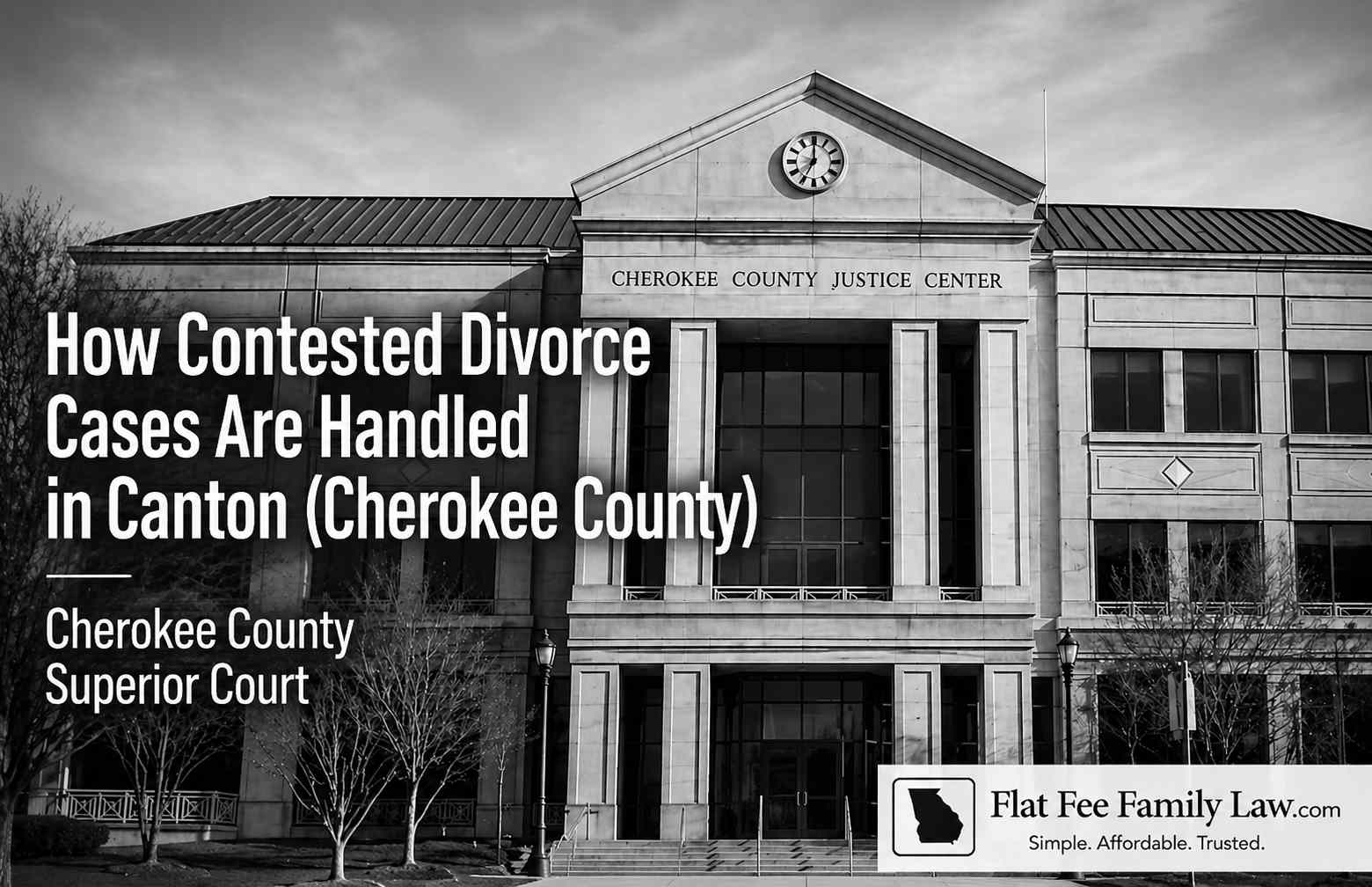
For cases properly filed in Cherokee County, divorce matters are handled through the Superior Court in Canton. Understanding the general process can help you know what may happen as your case moves forward.
What Makes a Divorce Contested in Georgia?
A divorce is generally considered contested when the spouses cannot agree on one or more issues that must be resolved before the divorce can be finalized. Common disagreements include:
- Legal or physical custody
- Parenting time
- Child support
- Division of the marital home
- Retirement accounts
- Property division
- Division of debts
- Other financial or parenting issues
A divorce does not have to involve disagreements about everything to be contested. The spouses may agree on several issues while asking the court to resolve the remaining disputes.
How Does a Contested Divorce Case Begin?
A divorce generally begins when one spouse files a Complaint for Divorce and the other spouse is properly served or otherwise acknowledges service. The responding spouse then has an opportunity to address what the filing spouse is requesting.
Once both sides’ positions become clearer, the disputed issues begin to determine how the case proceeds. For example, one couple may agree that they should divorce but disagree about custody. Another may agree about parenting issues but disagree about the marital home or division of retirement assets. Understanding what is actually disputed is an important early step in a contested case.
Can Temporary Issues Be Addressed While the Divorce Is Pending?
Yes. Some issues may need to be addressed before the divorce can be finalized. Depending on the circumstances, a party may ask the court to enter temporary orders concerning matters such as:
- Custody
- Parenting time
- Child support
- Possession of the marital home
- Financial responsibilities
- Other issues that cannot reasonably wait until the case is finished
Temporary orders generally govern what happens while the case is pending. They are not necessarily the final resolution of the issues in the divorce. Georgia’s Uniform Superior Court Rules also contain requirements concerning financial disclosures and notice associated with temporary hearings in domestic-relations cases.
What Role Does Discovery Play in a Cherokee County Divorce?
Discovery allows the spouses to obtain information relevant to the disputed issues. Depending on the case, that may include:
- Tax returns
- Bank and investment statements
- Income and employment information
- Retirement accounts
- Mortgage and property records
- Credit-card and other debt information
- Business records
- Communications
- Other documents relevant to custody or financial disputes
Discovery can be particularly important when the spouses disagree about finances or when one spouse does not have complete information concerning income, assets, or debts. It can also help both sides better understand the evidence before negotiating a settlement or preparing for a hearing.
Can a Contested Divorce in Canton Be Settled?
Yes. Calling a divorce “contested” describes the fact that unresolved issues exist. It does not mean the spouses are prohibited from reaching an agreement later. Negotiations can occur throughout the case, including while discovery is underway.
Mediation can also provide an opportunity for the spouses to work toward an agreement with the assistance of a neutral mediator. Georgia’s court system supports mediation and other forms of alternative dispute resolution as alternatives to traditional litigation. The spouses may resolve the entire case or reach agreements about some issues while leaving others for the court to decide.
Will a Contested Divorce in Cherokee County Go to Trial?
Not necessarily. Georgia’s Uniform Superior Court Rules provide that a contested divorce cannot be finalized until all contestable issues have been resolved. Those issues can be resolved through agreement or, when necessary, by the court.
If the spouses cannot reach an agreement on every disputed issue, the remaining matters may ultimately require a final hearing or trial. At that point, each side may present testimony, documents, and other evidence relevant to the issues the court must decide. Depending on the case, those issues might include custody, parenting time, child support, property division, the marital home, debts, or other unresolved matters.
How Long Does a Contested Divorce Take in Cherokee County?
There is no single timeline for a contested divorce, in Cherokee County the timeline depends significantly on the judge assigned to the case. How long a case takes can also depend on:
- How many issues are disputed
- Whether custody is contested
- The complexity of the spouses’ finances
- How much discovery is necessary
- Whether temporary hearings are needed
- Whether the parties reach agreements
- Mediation
- Court scheduling
- Whether a final hearing or trial is necessary
A case involving one relatively narrow disagreement can proceed very differently from a divorce involving contested custody and substantial financial issues. Rather than relying on a promised timeline, it is generally more useful to understand which stages your particular case may require.
How Should You Prepare for a Contested Divorce in Cherokee County?
If you are considering filing for divorce or have already been served, begin by identifying the issues that are actually likely to be disputed. Depending on your circumstances, useful documents may include:
- Recent tax returns
- Pay stubs and income records
- Bank and investment statements
- Retirement-account statements
- Mortgage and property records
- Credit-card and debt statements
- Insurance information
- Documents concerning significant assets
- Information about the children’s schedules and needs
- Existing court orders
- Relevant communications between you and your spouse
The goal is not simply to collect every document connected with the marriage. Focus on information relevant to the issues that need to be resolved.
Contested Divorce Cases in Canton and Cherokee County
A contested divorce can change considerably between filing and the final decree. Issues that seem impossible to resolve at the beginning may eventually be settled through negotiation or mediation, while other disagreements may require a judge’s decision. Understanding what is disputed, what information is needed, and what may happen at each stage can help you make informed decisions as the case proceeds.
Brendan Dalton represents clients in contested divorce cases in Canton, throughout Cherokee County, and across Georgia. Flat Fee Family Law provides flat-fee representation for defined stages of a contested divorce so clients can understand the agreed legal cost before moving forward. Schedule a call today to learn more about how Flat Fee Family Law can help you with your divorce matter.
Frequently Asked Questions About Contested Divorce in Georgia
Where are divorce cases handled in Cherokee County?
Divorce cases properly filed in Cherokee County are handled through Superior Court. Cherokee County is part of the Blue Ridge Judicial Circuit, with court operations in Canton.
Does a contested divorce in Cherokee County have to go to trial?
No. Spouses can resolve disputed issues through negotiation or other settlement efforts. A trial or final hearing may be necessary when issues remain unresolved.
Can we settle after the divorce has already been filed?
Yes. Settlement discussions can occur throughout the case. A divorce that begins as contested may ultimately be resolved by agreement.
Can the court enter temporary orders before the divorce is final?
Depending on the case, the court may address temporary issues while the divorce remains pending, including custody, parenting time, support, and other matters.
What happens if we agree on some issues but not others?
The spouses can narrow the dispute by resolving the issues on which they agree. Remaining contested issues may continue through the court process and, if they cannot be settled, may ultimately require a judicial decision.