
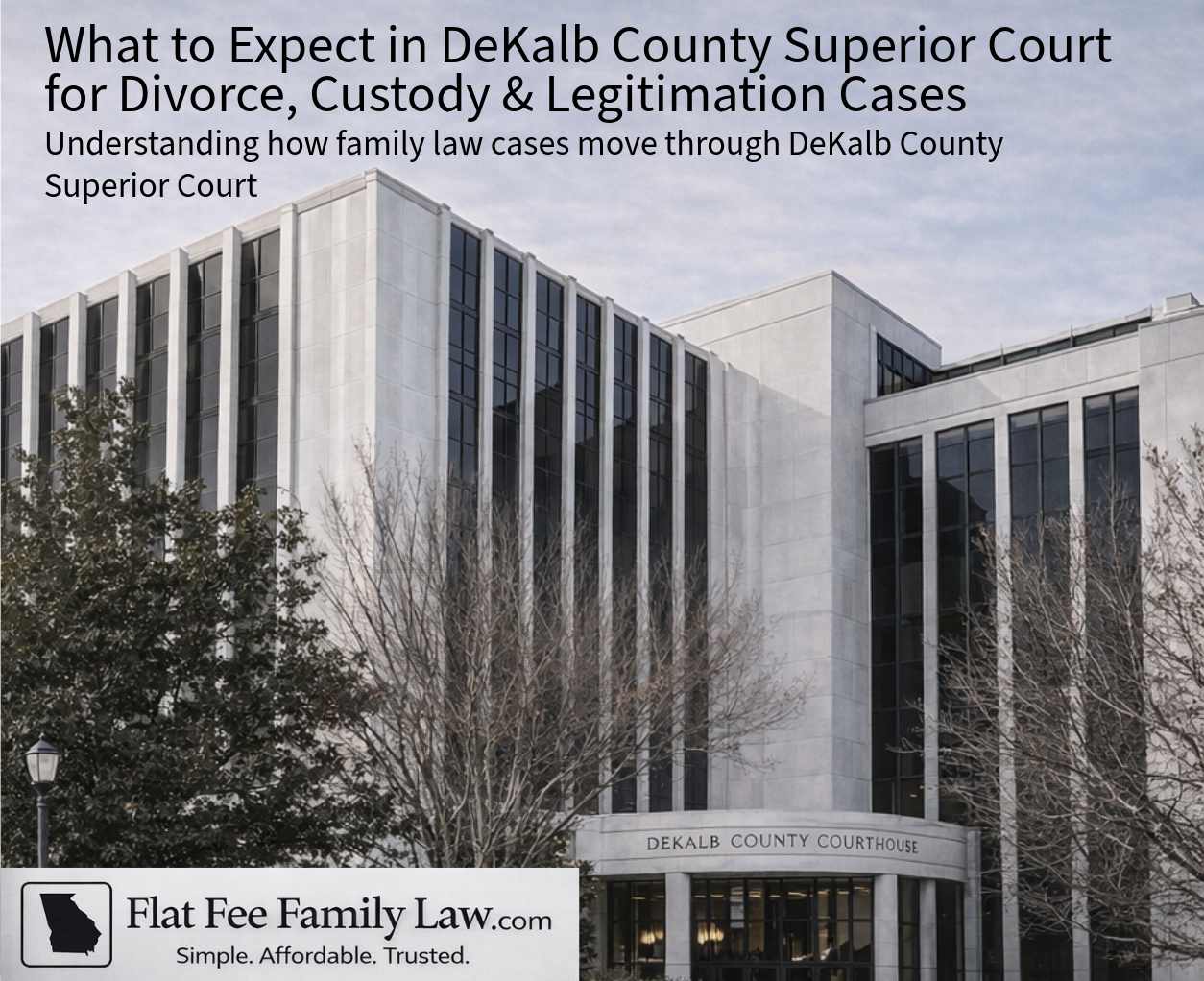
What to Expect in DeKalb County Superior Court (Decatur, GA) (And What Judges Actually Pay Attention To)
If you have a divorce, custody, or legitimation case in DeKalb County, one of the most common questions is: what is court actually like—and what matters when you get there?
While every case is different, DeKalb County Superior Court, in Decatur, GA, follows a fairly consistent structure. Understanding how cases move—and what judges are really focused on—can make a meaningful difference in how you prepare.
If you have a divorce, custody, or legitimation case—and especially if you have a court date scheduled—in DeKalb County, one of the most common questions is: what is court actually like, and what matters when you get there?
How Cases Typically Move Through DeKalb County Superior Court
Divorce, custody, and legitimation cases in DeKalb County Superior Court follow a similar path:
- Filing of the case (divorce, custody, or legitimation)
- Service on the other party
- Response and initial pleadings
- Possible temporary hearing (if issues need immediate attention)
- Discovery and negotiation
- Mediation (often required before trial)
- Final hearing or trial if no agreement is reached
Some cases resolve early. Others take longer depending on complexity, conflict level, and how prepared each side is.
What DeKalb County Judges Actually Focus On
Judges in DeKalb County are not there to hear every personal detail of your case. They are focused on specific legal issues and practical outcomes.
1. Preparation and Organization
Judges expect you (or your attorney) to:
- Have documents ready
- Know what you are asking for
- Stay focused on the issues
Disorganized presentations hurt credibility quickly.
2. Parenting Plans (In Custody Cases)
In custody and legitimation cases, parenting plans are critical. Judges are looking for:
- Clear schedules
- Realistic arrangements
- A focus on the child’s best interests
Vague or incomplete plans tend to create problems.
3. Credibility
Credibility matters more than people expect. Judges pay attention to:
- Consistency in what you say
- Whether your testimony matches your filings
- How you present yourself in court
Overstating or exaggerating can backfire.
4. Financial Clarity
In divorce and child support matters, your financial picture must be clear. This includes:
- Income
- Expenses
- Assets and debts
Your Domestic Relations Financial Affidavit (DRFA) needs to be accurate and complete.
5. Willingness to Be Reasonable
Judges notice when one party is being unnecessarily difficult. They often favor:
- Practical solutions
- Compromise where appropriate
- Positions that reflect real-world outcomes
What Surprises People About DeKalb County Court
Many people expect court to be dramatic or unpredictable. In reality:
- Hearings are often shorter than expected
- Judges move cases efficiently
- The focus stays on key issues—not personal grievances
Preparation matters far more than emotion.
How to Prepare Before Your Court Date
Before going to court, make sure you:
- Understand what issues will be addressed
- Have all required documents ready
- Know the outcome you are asking for
- Have a clear and organized presentation
Waiting until the last minute to prepare is one of the most common mistakes. Preparing in advance—rather than waiting until just before your hearing—is one of the most important steps you can take in any DeKalb County Superior Court case.
How DeKalb County Compares to Other Metro Atlanta Courts
While the overall legal process is similar across Georgia, each county court system has its own pace, expectations, and approach to handling family law cases.
In DeKalb County Superior Court, judges tend to focus heavily on organization, clear presentations, and whether each party is prepared to address the specific legal issues in their case. Hearings often move efficiently, and there is an expectation that parties come to court ready to move their case forward.
This can feel different from other nearby courts:
- In Fulton County, cases can involve more volume and complexity, and preparation is critical due to the number of matters handled each day.
- In Gwinnett County, there is often a strong emphasis on structure, documentation, and well-prepared parenting plans in custody cases.
- In Cobb County, judges tend to expect clear, practical presentations and a focus on resolving issues efficiently.
- In Henry County, hearings are often more direct, with judges expecting parties to stay focused on the key issues without unnecessary detail.
- In Newton County, the process can feel more streamlined, but preparation and organization still play a major role in how cases move forward.
- In Chatham County, court expectations often center on preparation and understanding how your case will be presented before your court date.
No matter the county, one thing is consistent: preparation, organization, and a clear understanding of your case matter far more than emotion or unnecessary detail.
Final Thoughts
Going to court in DeKalb County does not have to feel overwhelming —but preparation plays a critical role in how your case is handled. Understanding how the process works and what judges actually care about puts you in a much stronger position when your case is called.
Talk With a Georgia Family Law Attorney
Understanding how divorce or legitimation cases work in DeKalb County is one thing. Knowing how the court process, timelines, and expectations apply to a specific situation—especially when custody, financial issues, or disagreements are involved—is where things become more complex.
If you have a hearing scheduled or are trying to decide your next step, having a clear plan before you walk into court matters. Flat Fee Family Law represents clients across Georgia in divorce, custody, and legitimation cases, including those involving hearings in DeKalb County Superior Court.
Schedule a consultation with our attorney, Brendan Dalton, to discuss your situation and next steps and learn how Flat Fee Family Law can support you in your family law matter.
Frequently Asked Questions
How long does a DeKalb County court hearing take?
Many hearings are shorter than expected, sometimes lasting only a few minutes depending on the issues and preparation level.
Is mediation required in DeKalb County?
In many cases, mediation is required before a final trial, especially in contested matters.
What should I bring to court?
You should bring all relevant documents, including financial information, parenting plans (if applicable), and any evidence you intend to rely on.
Do I need an attorney for a DeKalb County court date?
You are not required to have an attorney, but having guidance—especially in contested cases—can make a significant difference in preparation and presentation.